

History of AI:
Paul Kirby’s robot painter, and the amazing AI systems behind it, have challenged notions of what a machine can and can’t do. You can see for yourself by visiting Paul Kirby’s Virtual Art Gallery & Robotics Studio. As algorithms and machine learning become ever more present in our daily lives, it’s incredible to look back upon the history of artificial intelligence. Our modern existence… well, it started as a wild idea.
In the 20th Century, the concept of artificial intelligence finally became a real possibility. Advances in the theory and understanding of mathematics, coupled with formalized study of reason and logic building on the work of philosophers from antiquity through the turn of the 20th Century allowed computing pioneers to arrive at a “theory of computation.” This understanding was developed by titans of the age like Alan Turing and Alonzo Church, men who later posited that a machine could simulate any and all mathematical deductions using just a representative system of symbols.
AI and robotics researchers of the late 80s expressed criticism of the dominant, symbolic approach to AI development. Advancements in human neuroscience and cognitive psychology revived interest in the connectionist approach to AI. This shift in focus led to the creation of many important “soft computing” tools, such as neural networks, fuzzy logic systems, and evolutionary algorithms. By the late 1990s, AI was once again the belle of the technological ball, and by the millennium, systems produced by AI research were widely used in computing.
What is AI?
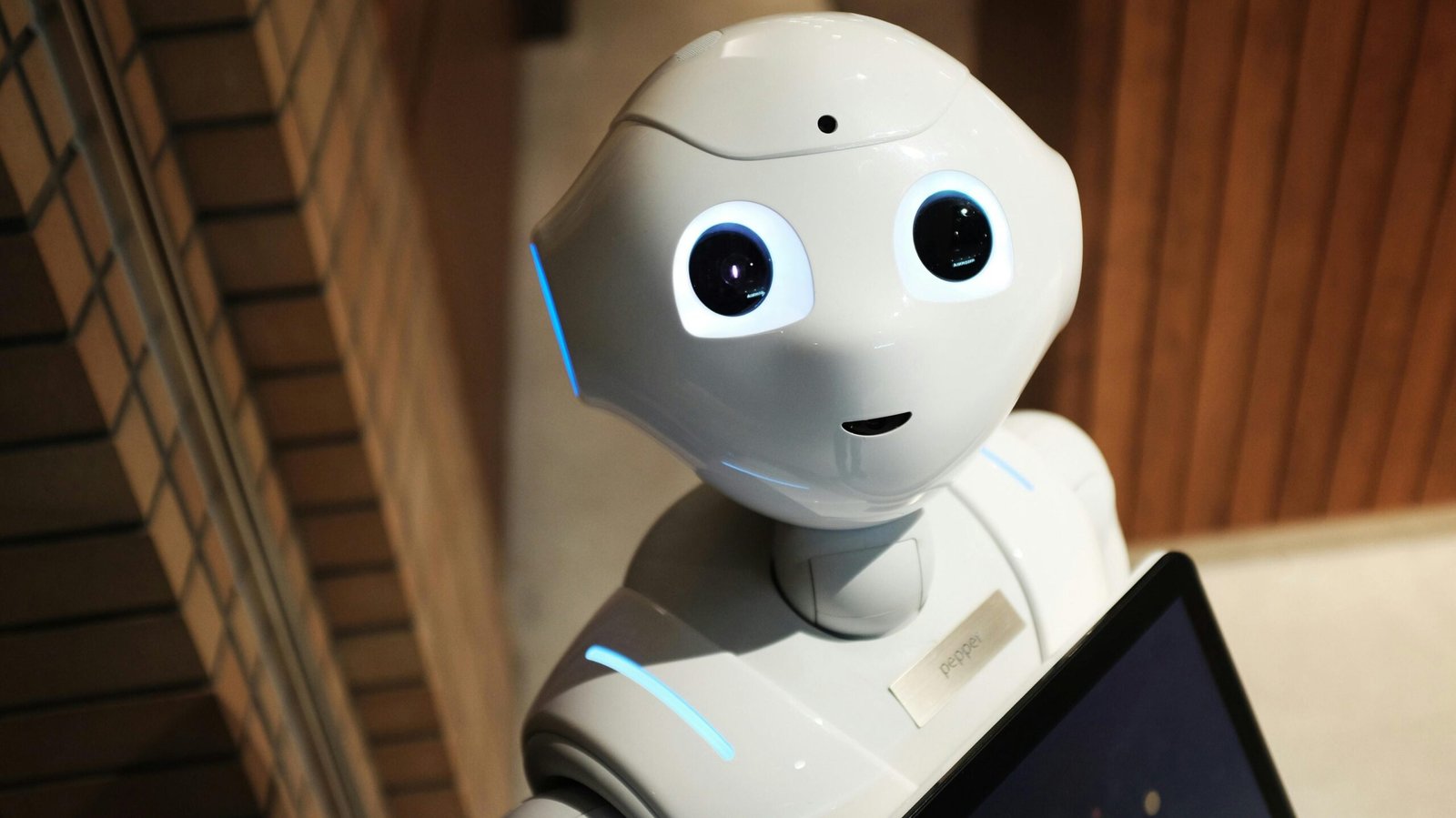
Artificial intelligence (AI) is technology that enables computers and machines to simulate human learning, comprehension, problem solving, decision making, creativity and autonomy.
Applications and devices equipped with AI can see and identify objects. They can understand and respond to human language. They can learn from new information and experience. They can make detailed recommendations to users and experts. They can act independently, replacing the need for human intelligence or intervention (a classic example being a self-driving car).
But in 2024, most AI researchers, practitioners and most AI-related headlines are focused on breakthroughs in Generative Ai, a technology that can create original text, images, video and other content. To fully understand generative AI, it’s important to first understand the technologies on which generative AI tools are built: Machine Learning and Deep Learning.
AI Technologies:
- Autonomous vehicles
- Biometrics
- Chatbots
- Decision management
- Deep learning platforms
- Digital assistants
- Digital image processing
- Entertainment streaming apps
- Facial, speech, and image recognition
- Fraud detection
- Gaming
- Generative AI tools like ChatGPT
Components of Ai:
- Data: AI systems learn and make decisions based on data, and they require large quantities of information to train effectively, especially for machine learning (ML) models.
- Algorithms: Algorithms are the sets of rules AI systems use to process data and make decisions. Machine learning algorithms, for instance, learn and make predictions and decisions without explicit programming.
- Computing power: AI algorithms often need significant computing resources to process large quantities of data and run complex algorithms.
How AI beneficial for us?
Artificial intelligence has enormous potential to serve society. Its problem-solving capabilities can help people and communities around the world by tackling some of today’s toughest challenges. Applications include:
- Developing new drugs, detecting disease, and improving medical applications.
- Fighting climate change, poverty, and hunger.
- National defense and cyber security.
- Improving access to education, healthcare, and clean water.
- Improving transportation safety and efficiency.
- Solves complex business problems.
- Streamlines decision-making.
- Manages and automates repetitive tasks.

What AI can do?
AI is a vast terminology helps us to automate different tasks perfectly and efficiently.
- Learning. A key aspect of AI is learning, which allows AI systems to digest data and enhance their functions without direct human coding.
- Reasoning and decision-making. Reasoning and decision-making systems employ logical rules, probability models, and algorithms to reach conclusions and make reliable decisions based on inference.
- Problem-solving. Problem-solving in AI involves processing data, manipulating it, and applying it to devise solutions for specific issues.
- Perception. The perception component of AI includes tasks like image recognition, object detection, image segmentation, and video analysis.
Can AI replace jobs?
Artificial intelligence (AI) could replace the equivalent of 300 million full-time jobs, a report by investment bank Goldman Sachs says. It could replace a quarter of work tasks in the US and Europe but may also mean new jobs and a productivity boom.
And it could eventually increase the total annual value of goods and services produced globally by 7%. The report also predicts two-thirds of jobs in the U.S. and Europe “are exposed to some degree of AI automation,” and around a quarter of all jobs could be performed by AI entirely.
Researchers from the University of Pennsylvania and OpenAI found some educated white-collar workers earning up to $80,000 a year are the most likely to be affected by workforce automation.
Forbes also says that According to an MIT and Boston University report, AI will replace as many as two million manufacturing workers by 2025.
A study by the McKinsey Global Institute reports that by 2030, at least 14% of employees globally could need to change their careers due to digitization, robotics, and AI advancements
Future of AI:
AI applications affect many aspects of our lives. And AI is predicted to grow even more pervasive as it revolutionizes sectors including health care, education, finance, security, transportation, and advertising. As AI makes difficult tasks less complex and replaces tedious or dangerous tasks, the expectation is that the human workforce will shift our focus to endeavors that require creativity and empathy.
In healthcare, AI is improving medical diagnostics, enabling personalized treatments, and assisting in complex surgical procedures. The transportation sector is experiencing the emergence of autonomous vehicles and intelligent traffic management systems, promising safer and more efficient mobility. In finance and economics and business analytics, AI is reshaping algorithmic trading, fraud detection, and economic forecasting, altering the dynamics of global markets. And AI is transforming education by offering personalized learning experiences and intelligent tutoring systems.