

In less than a second after users make any number of requests—whether that is searching the web, watching a movie, making a purchase, or communicating with friends—these requests all congregate in an invisible Centralized Computing Facility (CCF). The existence of CCFs is the culmination of billions of contracts between governments, businesses, and non-profit organizations to allow them to continue to create value for society through the use of technology.
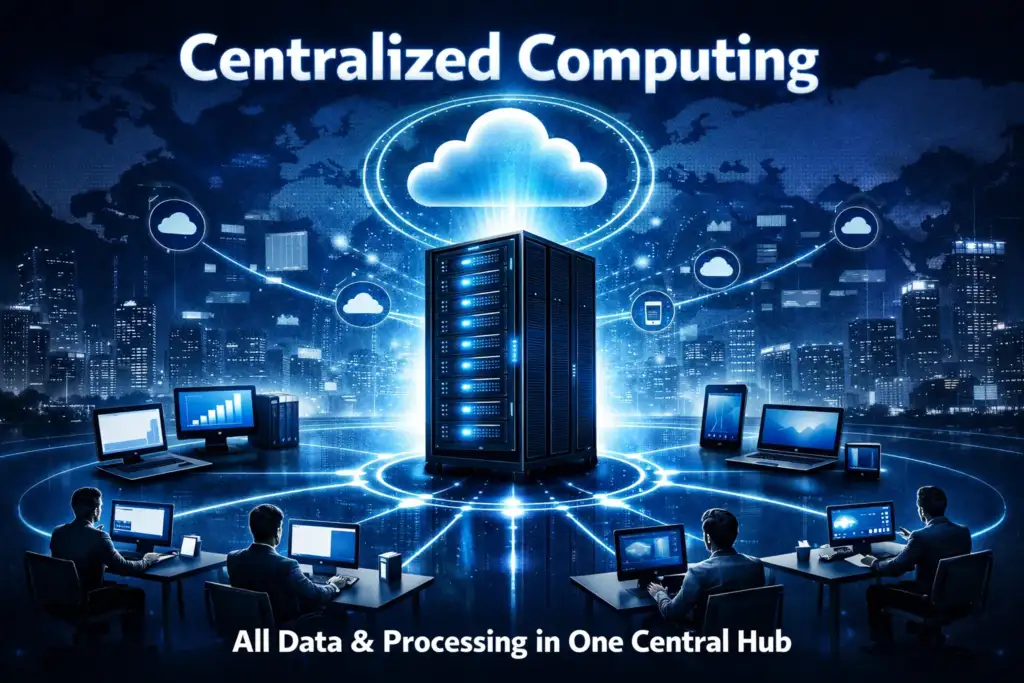
Centralized Computing Facilities
Centralized Computing Facilities (CCFs) are large purpose-built facilities such as Data Centers that serve as the centralized location for information technology equipment such as servers, networking equipment, storage, and more, designed to process and store the data of organizations and the general public.
The modern digital economy has been driven to consolidate massively about just a few gigantic hyperscale CCFs (leased or owned) operated by a mixture of Amazon, Microsoft, Google, and some nation-state or institutional providers.
Consolidation was not the only outcome of the economic forces leading to CCF development; centralizing data creates the best economies of scale, centralized data collects large amounts of data, enabling enterprises to create value. Only through the accumulation of many small enterprises in a single location can an enterprise achieve the required economies of scale to construct massive, efficient cooling systems; negotiate bulk energy contracts, hire specialized staff and have redundant systems capable of operating 24/7 ,365 DAYS . A single hyperscale facility can contain hundreds of thousands of CCF servers, giving that organization utilization rates that far exceed traditional enterprise data centers.
Developing a data center means you are betting that data will be generated for as long as there is no capacity to manage it. Based on my research so far, I have not seen that bet go bad.
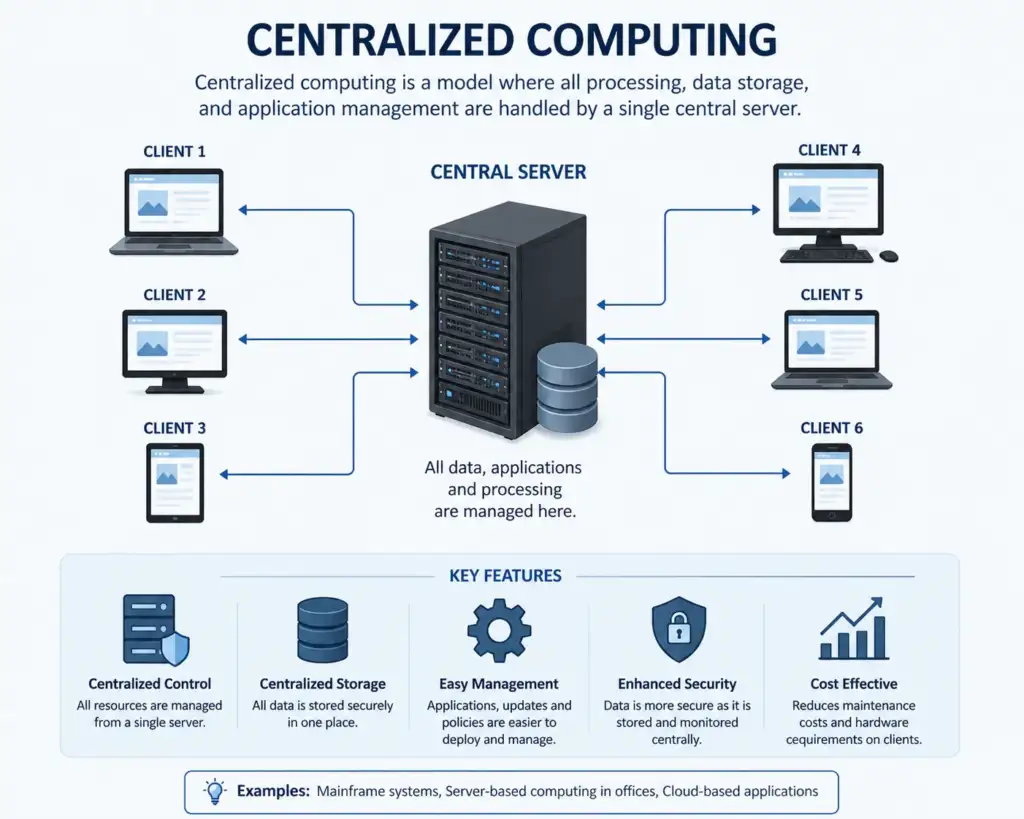
The Reasons for a Centralized Approach
With cloud computing becoming the norm, centralized computing has seen tremendous growth over the 21st century. The launch of Amazon Web Services (AWS) in 2006 was an eye-opener for the market, proving that any spare computing power could be sold on a pay-per-use basis similar to how central power plants provide power to residences and businesses. Comparing cloud computing to this way of conducting business has been one of the strongest metaphors in the World. It has allowed businesses that historically had on-premises data centers to now use shared computing resources – with the amount spent on capital expenditures now replaced by the amount spent on operating expenditures while also providing far greater flexibility.
In economic terms, the change has destroyed the ability for a business to continue operating in an on-premise environment. A small to mid-sized company running its infrastructure in-house will typically run its servers between 15 – 20% of the time, whereas a hyperscale cloud provider can run its servers between 65 – 80% of the time. The remaining server capacity is simply wasted as far as cost is concerned and is not sustainable because of the deterioration of the equipment (e.g. heat, power, depreciation) as well.
Less than one per cent of the total amount of electricity consumed globally in 2025 will be consumed by data centres; there will be over 300 hyperscale data centres globally in 2025; and there will be three times the efficiency of conducting on-premise computing as compared to running the same application in a cloud environment (accurate as of 2015).
Dependence on Centralized Computing Facilities
As has been widely reported, central computing facilities are not simply a convenience, but an essential infrastructure to support our current economy. Major banking systems and healthcare records, logistics operations and national communications networks all rely on the use of shared computational resources and are thus dependent upon one another.
The design of central computing facilities must include redundancy and resilience measures. Facilities have multiple, independent sources of power, as well as on-site diesel generators capable of providing power for days, raised-floor cooling systems, and fire suppression systems designed to minimize water damage to the servers. Tier IV facilities are the highest tier and provide an annual uptime guarantee of 99.995%, which translates to 26 minutes of downtime annually.
While resilience at an individual facility does not eliminate systemic risk, the failure of any one cloud provider’s control plane could potentially cause thousands of companies (airlines, banks, hospitals, etc.) to lose access to critical systems simultaneously. As demonstrated by the outages experienced by Facebook in October 2021, when all of Facebook’s messaging apps were taken offline for a six-hour period, even a company that has its own infrastructure can suffer from cascading failures within a centralized system.
Environmental Weight
Centralized computing facilities use a lot of energy and their consumption increases rapidly. A single large AI model can require as much electricity as hundreds of home will consume over the course of one year. On a global basis, data centers consume about 1% of the world’s electricity and more importantly, in many very hot or dry regions (e.g., areas that are prone to drought) the consumption of electricity is only part of a data center’s impact because they also use millions of gallons of local drinking water each day through cooling towers that evaporate the water that they use to cool their computing operations.
The computing industry has responded to this challenge with an incredible amount of innovation. For example, Microsoft has tested the limits of technology by creating submerged, seawater-cooled facilities. Google, on the other hand, has secured long-term contracts for renewable energy provided from onshore and offshore sources and has become one of the world’s largest corporate purchasers of renewable energy. In addition to these efforts, the waste heat generated by their data centers located in colder climates is being used to heat buildings that are near-by. These types of innovations are not largely “greenwashing” or just public relations, but rather are a result of significant cost savings as well as regulatory pressure to be more environmentally responsible.
The greenest data center is the one that generates waste heat that is used to heat up a local hospital in January. Efficiency is not a moral issue, but the results from being more efficient could potentially be identical to those of a moral person.
Geopolitical Implications of Infrastructure
Recently, there has been a noticeable increase in the use of large amounts of data and cloud storage systems worldwide. This has raised serious concerns among many governments about how this data is being stored, accessed, and used.
In response to these concerns, many governments have enacted laws requiring businesses and corporations to keep their data within the country they reside in (data residency laws) or to use a cloud-based server located within their own country (sovereign cloud).
Countries such as the EU, China, and India are attempting to regain control of their computing infrastructure (data residency laws) in the hopes of safeguarding their citizens’ personal information and preventing foreign governments from accessing confidential government data.
As a result, the once-open and unrestricted nature of the internet is rapidly becoming less so. Many multinational corporations utilize regional data centers to comply with local laws while many cloud providers offer different types of cloud service to individuals and businesses to comply with local laws. Centralization remains, however, the composition of centralization is being significantly impacted.
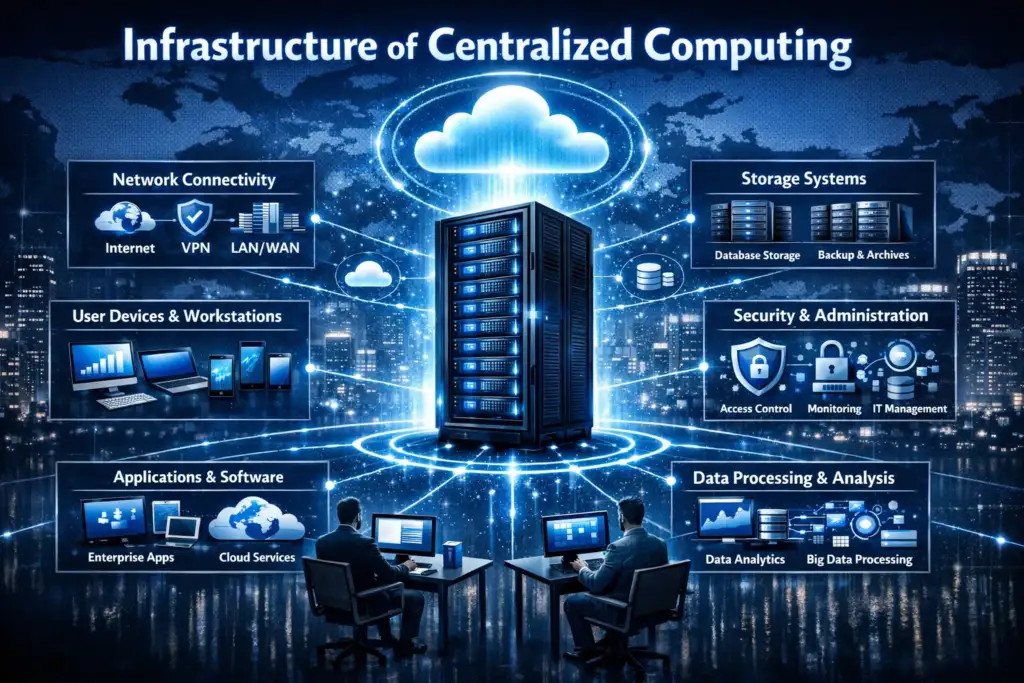
Artificial Intelligence
Recently, there has been a rise in the demand for centralized storage systems due to the rise of large-scale artificial intelligence. The need to train and run foundational AI models requires the use of large clusters of computers (i.e., GPUs/AIs) that cannot be easily distributed alongside these other types of computers, renting them out, etc. In addition, the computers required to perform these tasks are expensive and require high electricity consumption, meaning they need to be built on purpose-built facilities that also include high voltage electrical service and liquid cooling specifically for them.
The ramifications of this fundamental shift in our thinking about computing have been significant. It has turned the traditional role of data centers from passive, storage and processing facilities to active cognitive engines that produce a wide range of outputs , everything from text to images to decisions to predictions ,that in turn influence our daily lives as human beings, at scale. The way AI is currently structured means that fewer than a handful of computing facilities will be mediating an astounding amount of information that we all use on a day-to-day basis, throughout the world.
Conclusion
In conclusion, the fact that today’s networked computing facilities are functionally the core infrastructure for how we all now live our lives cannot be overstated. These new facilities are improbable structures that have required unusual levels of precision engineering to build, vast amounts of capital investment to construct/operate and significant amounts of human attention to maintain – have become commonplace as a result of their ability to consistently perform as required. While the concentration of data at these facilities is an appropriate response to economic and technical constraints, it simultaneously introduces dependencies and vulnerabilities that our societies are only just now beginning to examine in earnest.
While the issues surrounding the management and operation of these computing facilities may be technical in nature, the real questions about them are about their political and ethical implications: who will control them? What are their environmental impacts? What happens if they fail? And how much of our cumulative human knowledge, memory and communication can or should ever rely on such a high concentration of resources in one place? These are the questions that we as a society must answer in the very near future, since these infrastructures are already built and are currently how our world operates.






2 Comments
Ayan aslam
June 3, 2026Plz matric tech subjects class 10
Health science tech
Biology tech
Physics tech
Chemistry tech
Sultan Tutor
June 6, 2026Download all your Tech Books from the Official Link https://pectaa.edu.pk/curriculum-compliance/